
What Is Frost Heave, and How Does It Affect Paver Patios?
November 02, 2026As winter approaches, homeowners begin preparing their outdoor spaces for colder temperatures, snow, and ice. While much of the attention goes toward protecting patio furniture and maintaining outdoor surfaces, there's another winter concern that happens beneath your feet: frost heave.
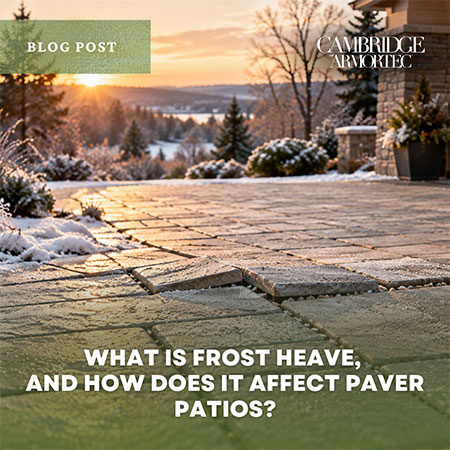
If you've ever noticed uneven pavingstones or sections of a patio that appear raised after a particularly cold winter, changes in the ground beneath the surface could be responsible.
Understanding what frost heave is, how it affects outdoor paving systems, and why proper installation matters can help homeowners make informed decisions about their outdoor spaces.
What Is Frost Heave?
Frost heave is the upward movement of soil caused by freezing conditions and the formation of ice beneath the ground's surface.
It typically occurs when three conditions are present:
- Freezing temperatures: Cold weather causes temperatures within the ground to drop below freezing.
- Moisture: Water is present in or can move through the soil.
- Frost-susceptible soil: Certain soils, particularly those containing fine particles such as silt, are more susceptible to frost-related movement.
As temperatures fall, moisture within the soil can migrate toward the freezing zone and form layers of ice, sometimes called ice lenses.
As these ice layers grow, they can push the surrounding soil upward, potentially affecting patios, walkways, driveways, and other structures built above them.
When temperatures rise and the frozen ground begins to thaw, the soil may settle again. However, it doesn't always return to its original position evenly.
Over time, repeated freezing and thawing can contribute to changes in the appearance and stability of outdoor paved surfaces.
How Does Frost Heave Affect Paver Patios?
Interlocking concrete pavers are designed as individual pavingstones installed over a prepared foundation. Although this system provides some flexibility compared with a continuous poured concrete slab, the ground beneath the patio still plays an important role in its performance.
When frost heave occurs, homeowners may notice several changes.
Uneven Pavingstones
One of the most noticeable signs of possible frost heave is an uneven patio surface.
As the ground freezes and expands, certain areas may rise higher than others, creating bumps or raised sections.
These differences in elevation can affect the patio's appearance and create potential tripping hazards.
Changes in Paver Alignment
When the underlying soil moves, it may cause sections of a patio to shift.
In some cases, homeowners may notice changes in the alignment of pavingstones or the joints between them.
Although minor movement doesn't necessarily indicate a major problem, significant or recurring changes should be evaluated by a qualified contractor.
Drainage Concerns
An uneven patio surface can also affect how water moves across the paved area.
If sections rise or settle, water may begin collecting in areas where it previously drained away.
Standing water can create additional concerns during winter, particularly when temperatures drop and accumulated moisture freezes.
Movement During Spring Thaw
Frost heave isn't limited to what happens when the ground freezes.
As spring approaches and ice beneath the surface begins melting, the supporting soil may temporarily weaken.
This can contribute to uneven settling or changes in the paved surface, particularly when drainage or underlying soil conditions are less than ideal.
Why Does Proper Paver Installation Matter in Cold Climates?
A beautiful patio begins long before the first pavingstone is placed.
The materials and preparation beneath the finished surface are essential to long-term performance, especially in regions that experience freezing temperatures.
Here are three important factors that can help minimize frost-related problems.
1. Proper Base Preparation
The aggregate base serves as the foundation of a paver patio.
A properly designed and compacted base helps distribute loads, support the pavingstones, and maintain a more stable surface.
Cambridge Pavers emphasizes the importance of proper aggregate base preparation and compaction to help minimize movement and heaving during freezing and thawing.
The appropriate base thickness and materials depend on site conditions, soil characteristics, drainage requirements, and local climate.
2. Effective Drainage
Moisture is one of the essential conditions that contribute to frost heave.
That's why drainage should be considered during the design and installation of an outdoor paving project.
Proper grading helps direct surface water away from structures, while an appropriately designed base and drainage system help manage moisture beneath the pavement.
For homeowners in cold-weather climates, working with a contractor who understands local drainage conditions is particularly important.
3. Understanding Soil Conditions
Not every property has the same type of soil.
Some soils are more susceptible to frost heave because of how they retain and transport moisture.
An experienced contractor can evaluate site conditions and determine whether additional preparation, drainage improvements, or different base materials may be necessary.
Addressing these considerations during installation can help reduce the likelihood of future problems.
Are Interlocking Concrete Pavers a Good Choice for Cold Climates?
Yes. Interlocking concrete pavingstones can be an excellent option for patios, walkways, and driveways in regions that experience freezing temperatures.
Unlike a large continuous concrete slab, an interlocking paving system consists of individual units that can accommodate limited movement within the pavement structure.
This design also offers an advantage when repairs are necessary.
If a section of a patio becomes uneven, a qualified contractor may be able to remove the affected pavingstones, correct the underlying issue, and reinstall them.
However, it's important to understand that no paving system is completely immune to frost-related movement.
Proper installation, drainage, and appropriate base preparation remain critical to long-term performance.
Cambridge Pavingstones with ArmorTec® offer homeowners a wide range of colors, textures, sizes, and patterns, allowing them to create attractive outdoor spaces while considering the practical demands of their local climate.
What Should Homeowners Do if Their Paver Patio Experiences Frost Heave?
If you notice raised or uneven pavingstones during winter or after the spring thaw, it's important to determine what's causing the movement before attempting repairs.
Not all uneven pavers are the result of frost heave. Settling, drainage issues, and problems with the underlying base can also contribute to surface changes.
Homeowners should consider the following steps:
Inspect the affected area. Look for raised pavingstones, changes in surface elevation, or areas where water collects.
Pay attention to recurring problems. If the same section becomes uneven each winter, there may be an underlying condition that needs attention.
Avoid temporary surface fixes. Simply repositioning individual pavingstones without addressing the cause may not provide a lasting solution.
Consult a professional installer. An experienced contractor can assess the affected area and recommend an appropriate repair approach.
Depending on the condition of the patio, repairs may involve lifting the affected pavingstones, correcting the base, improving drainage, or addressing other site-specific issues.
Can Frost Heave Be Prevented?
While it's not always possible to eliminate the risk of frost heave entirely, thoughtful pavement design and professional installation can help minimize its effects.
The most important considerations include understanding soil conditions, managing moisture, selecting appropriate base materials, and ensuring proper compaction.
For homeowners planning a new patio, these details are worth discussing with a contractor before installation begins.
A patio isn't just about the pavingstones you see on the surface. It's also about the foundation supporting them through changing seasons.
Prepare for the Seasons Ahead With Cambridge Pavers
Winter brings unique challenges to outdoor living spaces, but planning and proper installation can make a meaningful difference in how a paver patio performs over time.
Whether you're considering a new patio, upgrading an existing walkway, or planning a complete outdoor transformation, understanding the importance of drainage, soil conditions, and base preparation is an essential part of the process.
Cambridge Pavingstones with ArmorTec® combine design versatility with the durability homeowners want for their outdoor spaces.
Ready to start planning your next project? Explore Cambridge's selection of pavingstones and find a professional installer who can help you create an outdoor space suited to your property and local climate.
With Cambridge Pavingstones with ArmorTec®, Your Outdoor Dreams Come True!