
Fire Pit vs. Outdoor Fireplace: Which Is Right for Your Backyard?
October 02, 2026Adding a fire feature can make a backyard feel warmer, more inviting, and more usable during cooler months. Two of the most popular options are fire pits and outdoor fireplaces, and while both can create a beautiful focal point, they offer very different experiences.
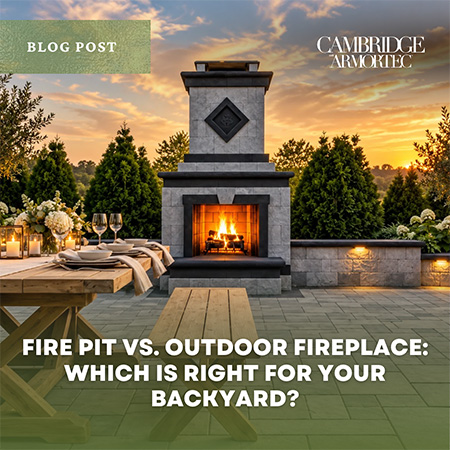
The best choice depends on your backyard layout, how you entertain, the amount of space available, and the type of atmosphere you want to create.
If you are deciding between a fire pit and an outdoor fireplace, understanding the differences in design, seating, warmth, cost, maintenance, and overall function can help you choose the right feature for your outdoor living space.
Cambridge Pavers offers outdoor living products that can be incorporated into both fire pit and outdoor fireplace designs, making it easier to create a cohesive look across patios, seating areas, walkways, and other backyard features.
What Is the Difference Between a Fire Pit and an Outdoor Fireplace?
The main difference between a fire pit and an outdoor fireplace is how the fire is positioned and how people gather around it.
A fire pit is typically open on all sides and designed for seating around the entire feature. This creates a casual, social atmosphere where guests can gather in a circle.
An outdoor fireplace is usually constructed with a firebox, chimney, and more defined front-facing design. Seating is generally arranged in front of the fireplace rather than around it.
Both options can provide warmth and ambiance, but the layout and experience are noticeably different.
Fire Pits Create a More Social Seating Arrangement
One of the biggest advantages of a fire pit is the way it encourages conversation.
Because seating can be arranged on multiple sides, guests naturally face one another. This makes a fire pit a strong choice for homeowners who frequently entertain groups of family and friends.
Fire pits can work especially well in open patio layouts, where there is enough room to create a dedicated gathering area. A fire pit can also become a central feature in a larger outdoor living design that includes paver patios, seating walls, outdoor kitchens, and walkways.
Cambridge Pavers can be used to help create a coordinated setting around the fire feature so the space feels intentional rather than added as an afterthought.
Outdoor Fireplaces Create a Defined Focal Point
An outdoor fireplace tends to feel more architectural.
Instead of sitting in the middle of a seating area, it usually anchors one side of the patio or outdoor room. The structure can create a strong visual focal point and make the space feel more enclosed and intimate.
Outdoor fireplaces may work especially well for homeowners who want their backyard to feel like an extension of the interior living space.
Furniture can be positioned facing the fireplace in a layout similar to a traditional indoor living room.
This type of arrangement can create a polished, structured look that pairs well with larger patios, covered outdoor spaces, and built-in seating.
Which Option Provides More Warmth?
Outdoor fireplaces often direct heat toward the seating area in front of them, while fire pits distribute heat more evenly around the entire feature.
For that reason, the better option depends on how you plan to use the space.
A fire pit can provide warmth to several people sitting around it, while an outdoor fireplace may provide stronger directional warmth to guests seated directly in front of the fire.
Wind conditions can also affect how much heat is felt.
In exposed backyards, the design and placement of the fire feature can make a major difference in comfort.
When planning a new fire feature, a professional installer can help evaluate the layout, prevailing wind direction, nearby structures, and seating arrangement.
Fire Pits Often Require More Open Space Around Them
Fire pits generally require enough room for the feature itself plus seating and safe circulation around the perimeter.
Because people may gather on every side, the overall footprint can become larger than expected.
Homeowners should consider:
- The size of the fire pit
- Distance between the fire and seating
- Walking paths around the area
- Nearby landscaping
- Overhead structures
- Local building or fire requirements
A small backyard can still accommodate a fire pit, but careful planning becomes especially important.
Outdoor fireplaces may sometimes be easier to incorporate against the edge of a patio because the seating typically faces one direction.
Outdoor Fireplaces Can Help Define an Outdoor Room
If your goal is to create a more structured outdoor living environment, an outdoor fireplace can help define the space.
A fireplace can act as a visual boundary and create the feeling of a dedicated outdoor room.
It may be incorporated into a patio with seating walls, columns, outdoor kitchens, pergolas, or covered structures to create a more complete backyard design.
Cambridge Pavers offers products that can be combined across different parts of an outdoor space, helping homeowners create consistent colors, textures, and design details throughout the patio.
Fire Pits Offer a Casual and Flexible Look
Fire pits usually create a more relaxed atmosphere.
They can fit into both traditional and contemporary backyard designs and work especially well in spaces intended for casual entertaining.
Round fire pits often create a classic gathering-space feel, while square or rectangular designs can provide a more modern appearance.
A fire pit may also be easier to integrate into an existing patio if there is already an open seating area.
However, placement should still be carefully planned to maintain appropriate distance from buildings, landscaping, furniture, and other materials.
Gas vs. Wood-Burning Fire Features
Both fire pits and outdoor fireplaces may be available in gas-burning or wood-burning configurations.
Each option has different advantages.
Gas fire features generally offer:
- Fast ignition
- Less cleanup
- More consistent heat
- No need to store firewood
- Easier everyday use
Wood-burning fire features may provide:
- A traditional campfire atmosphere
- The sound and smell of burning wood
- Larger natural flames
- A more rustic experience
Local regulations may restrict wood-burning fire features in certain areas, so homeowners should check applicable rules before choosing a design.
Installation requirements may also differ depending on whether the feature uses natural gas, propane, or wood.
Which Is Easier to Maintain?
Maintenance depends on the type of fuel and how often the fire feature is used.
Wood-burning fire pits require regular removal of ash and debris. Outdoor fireplaces may also require chimney and firebox maintenance depending on their design.
Gas-burning options generally require less everyday cleanup, but burners, ignition systems, and gas connections should still be inspected periodically.
Leaves and other debris should also be kept away from all fire features, particularly during fall.
Following manufacturer maintenance recommendations can help keep the feature working properly and looking its best.
Which Option Costs More?
Outdoor fireplaces are generally more substantial structures than fire pits, so they often require a larger investment.
The total cost of either option can vary based on:
- Size
- Materials
- Fuel type
- Gas line installation
- Site preparation
- Labor
- Seating walls
- Patio expansion
- Custom design features
A simple fire pit may require fewer materials and less construction than a full outdoor fireplace, while larger custom fire features can become significant design projects.
Instead of focusing only on the initial cost, homeowners may want to consider how frequently they expect to use the feature and how it fits into their overall backyard plans.
Consider How You Entertain
Your entertaining style can be one of the easiest ways to decide between a fire pit and an outdoor fireplace.
Choose a fire pit if you prefer:
- Group conversation
- Casual gatherings
- Seating arranged in a circle
- A central backyard feature
- A more open outdoor layout
Choose an outdoor fireplace if you prefer:
- A more defined seating area
- A focal point at one end of the patio
- A living-room-style arrangement
- A more architectural look
- A sense of enclosure in the backyard
Neither option is automatically better. The right choice depends on how you want people to use the space.
Think About Your Backyard Size and Layout
Before selecting a fire feature, look at the entire backyard rather than the feature by itself.
Consider where people currently walk, sit, cook, and gather.
If you already have an outdoor kitchen, the fire feature should complement the cooking and dining areas without interfering with traffic flow.
If you are planning a completely new outdoor living space, the fire pit or fireplace can become part of the initial design rather than being added later.
Pavers, walkways, seating walls, steps, and landscape elements can all help connect the fire feature to the rest of the backyard.
Cambridge Pavers offers outdoor living solutions that can support this type of coordinated design.
Safety and Placement Matter
Fire features should always be installed with safety in mind.
Proper placement may depend on:
- Distance from the home
- Nearby fences
- Trees and landscaping
- Covered structures
- Furniture
- Gas lines
- Local fire codes
- Manufacturer requirements
Homeowners should avoid placing fire features without considering these factors.
Professional installation can help ensure the feature is located appropriately and built according to applicable requirements.
Fire Pit or Outdoor Fireplace: Which Is Better for Your Backyard?
A fire pit may be the better fit if you want a casual, social gathering space where people can sit around the fire.
An outdoor fireplace may be better suited to homeowners who want a more structured outdoor room with a defined focal point.
Both options can extend the use of a backyard into cooler seasons while adding warmth, atmosphere, and visual interest.
The most important consideration is how the fire feature fits into the entire outdoor living space.
Rather than choosing a fire feature first and designing around it later, think about the patio, seating, walkways, cooking areas, and landscaping together.
A cohesive design can make the backyard feel larger, more functional, and more intentional.
If you are planning a new fire pit, outdoor fireplace, patio, or complete outdoor living space, explore design inspiration and outdoor living solutions from Cambridge Pavers at cambridgepavers.com.