
Spring Thaw Checklist: How to Inspect Your Patio After Winter
March 01, 2026Winter in the Northeast can be tough on outdoor surfaces. Snow, ice, and repeated freeze thaw cycles put patios, walkways, and driveways to the test.
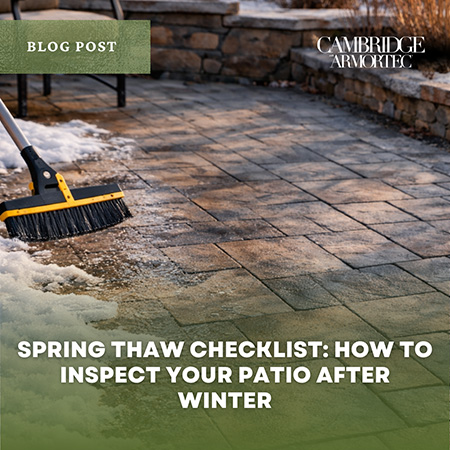
As temperatures rise, early spring is the ideal time to inspect your outdoor living space and ensure everything is ready for the season ahead. A simple walkthrough now can help protect your investment and keep your patio looking its best all year long.
Below is a practical spring thaw checklist to guide your inspection.
Inspect Your Patio for Freeze Thaw Damage
One of the most common concerns after winter is damage caused by freeze thaw cycles. As moisture enters small gaps and freezes, it expands. Over time, this can lead to shifting or minor surface irregularities.
When inspecting your patio:
- Look for uneven areas or slight settling
- Check edges and corners for movement
- Examine steps and transitions for stability
Check for Shifting, Settling, or Drainage Issues
Spring snowmelt often reveals areas where water may not be draining properly.
Walk your patio after rainfall and look for:
- Pooling or standing water
- Areas where water flows toward your home
- Sections that feel unstable underfoot
Evaluate Joint Sand and Edge Restraints
Joint sand plays an important role in maintaining structural integrity. Winter weather can occasionally cause joint sand to shift. Look for:
- Noticeable gaps between pavers
- Areas where sand appears washed out
- Loose or separated edging
How to Clean Concrete Pavers After Winter
Spring is the ideal time to refresh your patio after months of snow, ice, and seasonal debris.
When caring for concrete pavers, routine maintenance should begin with simple, non-aggressive methods before moving to anything stronger.
For seasonal maintenance:
- Sweep thoroughly to remove leaves and debris
- Rinse with a garden hose to clear surface buildup
- Use a mild detergent mixed with water for general cleaning
- Test any cleaner in an inconspicuous area first
For specific stains such as oil, rust, or organic buildup, cleaners formulated for concrete pavers should be used according to manufacturer instructions. When in doubt, consulting an authorized contractor can help ensure proper care.
High-quality pavers manufactured with advanced surface technologies are designed for durability through changing seasons, and proper maintenance helps preserve their appearance year after year.
When to Call a Professional Contractor
If you notice significant settling, drainage concerns, or structural changes, a professional assessment can help prevent more extensive repairs later.
Early spring is also a smart time to schedule any upgrades or expansions before contractor schedules fill for peak season.
A quick inspection today can help ensure your patio remains beautiful, functional, and ready for outdoor living all spring and summer long.